Professional credentials have become essential differentiators in human resources careers. HR certifications provide measurable proof of your skills, reflect professional dedication, and can elevate your career prospects. Many employers view HR certifications as evidence of professional commitment, specialized knowledge, and readiness for leadership responsibilities.
The HR certification market offers numerous options, from entry level credentials to advanced strategic qualifications. This diversity creates both opportunity and complexity. Professionals must navigate varying costs, eligibility requirements, examination formats, and recertification mandates while aligning their choice with career objectives and budget constraints.
This comprehensive guide presents a systematic approach to selecting HR certifications that match your professional goals, experience level, and financial considerations. By following this roadmap, you can make informed decisions that accelerate career progression while maximizing return on investment.
HR certifications serve as more than resume enhancements. These credentials represent comprehensive validation of your knowledge, skills, and expertise across various human resources domains. Issued by accredited institutions, certifications confirm that professionals meet rigorous industry standards while possessing the competence to excel in multifaceted HR roles.
The credibility factor extends beyond personal achievement. Organizations increasingly prefer certified candidates when filling senior positions such as HR Manager, Talent Acquisition Lead, or HR Business Partner. This preference stems from recognition that certified professionals possess standardized knowledge bases and commitment to ongoing professional development.
Certification programs provide structured training across critical areas, including recruitment, employee relations, payroll administration, legal compliance, data management, process automation, and performance management. This comprehensive exposure ensures professionals develop well-rounded expertise applicable across diverse organizational contexts.
Certification also changes how HR professionals show up in the workplace. Many report increased confidence in stakeholder conversations, policy discussions, and leadership interactions. Earning credentials often boosts professional confidence, enabling HR practitioners to engage more authoritatively with stakeholders. This enhanced credibility facilitates better relationships with colleagues and employees while increasing influence within organizational decision-making processes.
Understanding current HR challenges helps contextualize why specific certifications matter. The profession faces numerous pressures requiring specialized knowledge and advanced capabilities.
Remote work and global hiring have completely changed how HR teams operate. Managing distributed teams requires a deep understanding of cross-cultural communication, workforce diversity, and international labor regulations. Traditional training often fails to address these complexities adequately. Statistics reveal that 81% of recruiters prioritize cross-cultural skills for HR professionals handling international teams, highlighting the critical need for specialized preparation.
Traditional annual review systems are losing relevance as organizations shift toward continuous feedback models. Only 20% of HR leaders find traditional performance reviews effective, necessitating new frameworks and methodologies. HR professionals must adopt innovative appraisal approaches aligned with modern workplace expectations.
As hiring becomes increasingly digital, recruitment fraud and fake job scams have become major concerns for employers and candidates alike. Job scams have resulted in over 645 Million USD in financial losses since 2019, creating urgent demand for enhanced verification capabilities. HR practitioners need training in fraud detection and security protocols to protect both organizations and candidates.
Employment regulations evolve continuously, with many HR professionals struggling to keep pace with changing laws. Non-compliance carries severe financial and reputational consequences, making regulatory expertise essential for modern HR practice.
Only 30% of HR professionals demonstrate proficiency in analytics despite 68% acknowledging its importance. Organizations require HR teams capable of leveraging workforce data for strategic planning, creating demand for analytical skills.
Employee engagement directly impacts organizational performance. Many employees cite lack of career development as a primary reason for leaving positions, emphasizing the need for sophisticated retention strategies. HR professionals must develop expertise in engagement frameworks and career planning methodologies.
These challenges represent both significant pressure points and clear opportunities for professional growth. The appropriate certifications enable HR professionals to respond effectively, transforming potential vulnerabilities into sources of strategic advantage.
Selecting appropriate HR certifications requires systematic evaluation across multiple dimensions. This framework guides professionals through the decision-making process while ensuring alignment between credentials and career objectives.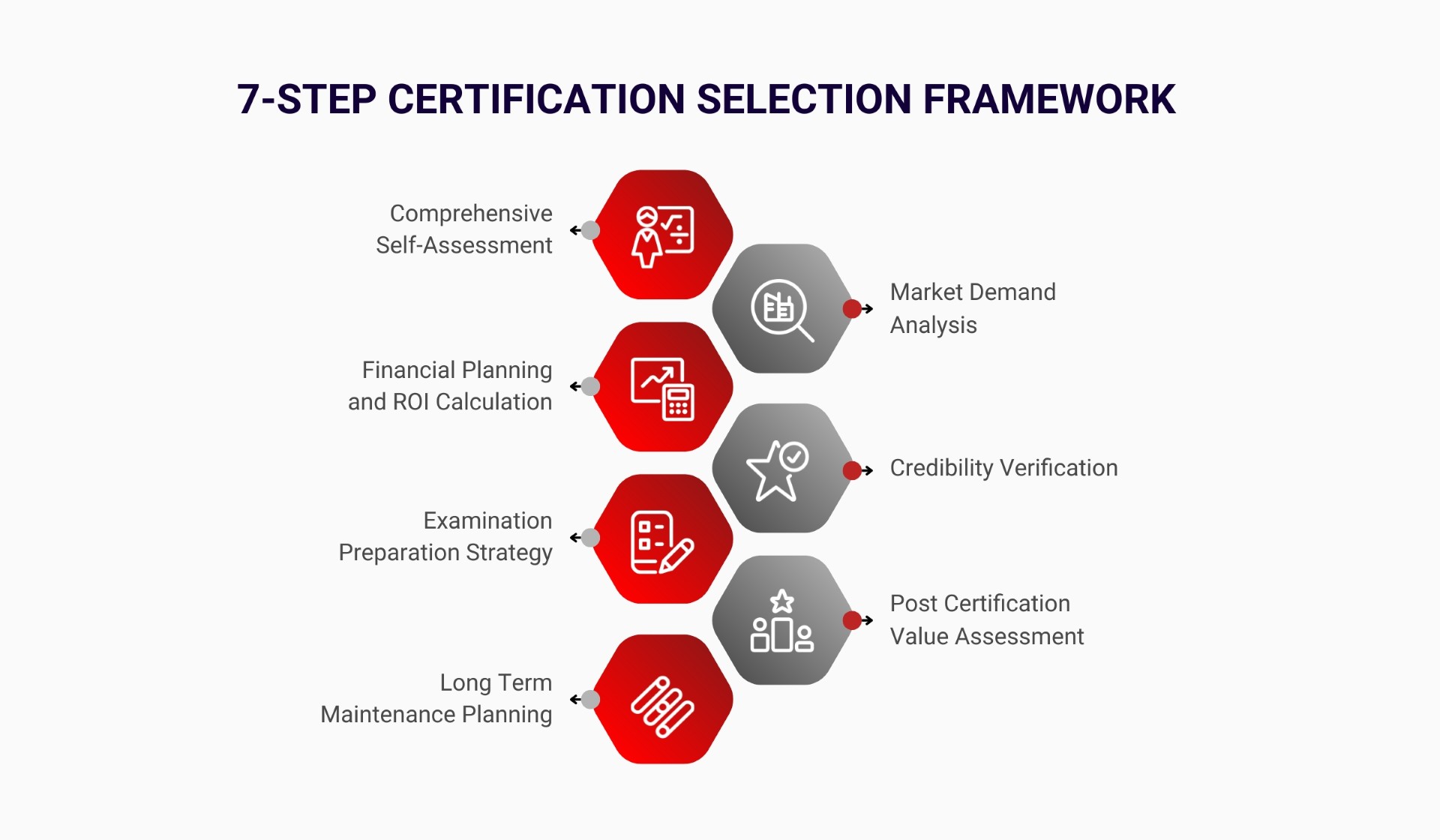
Start by assessing where you currently are in your HR career. Identify your career stage, whether entry level, mid-career, or senior leadership. This assessment shapes which certifications provide maximum value in your development phase.
Consider your specialization interests carefully. HR encompasses diverse functions including analytics, talent acquisition, compensation design, employee relations, and compliance management. Determining your preferred focus area narrows the field of relevant certifications significantly.
Research how specific credentials connect to desired roles. Some certifications provide broad HR knowledge while others offer deep specialization. Understanding this distinction prevents investing in credentials that fail to support your career trajectory.
For example, an HR coordinator with two years of experience interested in data driven roles might evaluate HR analytics certifications. After research, they might discover that specialized analytics credentials offer better preparation for their target positions than general HR certifications.
Not every certification carries the same value across industries or regions. Investigate which credentials employers prioritize in your target sector. Healthcare organizations may prefer different certifications than technology companies or manufacturing firms.
Review job postings systematically to identify patterns. Note which certifications appear frequently in position requirements or preferred qualifications. This market intelligence reveals which credentials carry most weight with potential employers.
Consider geographic factors when evaluating options. Some certifications enjoy strong recognition regionally while others command global respect. If you plan international career mobility, prioritize credentials with worldwide recognition. Conversely, if you intend to remain in specific markets, regional certifications may provide better networking opportunities and industry connections.
An HR professional in healthcare might research job postings and discover that Certified in Healthcare Human Resources certification appears frequently in preferred qualifications. This insight would inform their certification selection, ensuring alignment with industry expectations.
Certification costs vary substantially, ranging from several hundred to several thousand dollars. Compare total investment requirements including examination fees, study materials, preparation courses, and recertification expenses.
Calculate potential return on investment by researching salary increases associated with specific credentials. The documented 31.6% average earnings increase for certified professionals provides baseline expectations, though actual returns vary based on role, industry, and location.
Research whether employers offer tuition reimbursement or professional development funding. Many organizations support certification pursuits, significantly reducing personal financial burden. Understanding available resources helps optimize budget allocation.
A mid-career professional comparing CHRMP (300 USD-600 USD) and SHRM-CP (900 USD-1,500 USD). After calculating potential salary increases and confirming employer reimbursement policies, they might select the option offering best value given their circumstances.
Not all certifications carry equal weight. Verify that credentials come from recognized industry bodies such as Talent Management Institute, Society for Human Resource Management, HR Certification Institute, Certified Human Resource Management Professional, or Chartered Institute of Personnel and Development. These organizations maintain rigorous standards ensuring certification of quality and professional respect.
Look for third-party validation demonstrating commitment to quality assurance. Partnerships with universities, use of standardized testing platforms like Mettl or Prometric, and CredBadge verification systems all indicate legitimate, respected programs.
Avoid unverified providers lacking clear accreditation or industry recognition. While these programs may cost less initially, they often fail to deliver career advancement value that recognized credentials provide. The certification reputation directly impacts how employers perceive your qualifications.
Consider a specialist researching online certifications who discovers a provider lacking industry accreditation. By choosing a credential conducted through standardized testing platforms with clear industry recognition, they ensure their investment yields genuine professional benefits.
Successful certification requires effective preparation. Understand the examination format and content thoroughly before beginning to study. Different certifications employ various question types, from knowledge-based assessments to situational judgment evaluations.
Create structured study plans that allocate time appropriately across content areas. Identify personal strengths and weaknesses to focus on effort where most needed. Utilize diverse preparation resources including official study guides, online courses, practice examinations, and study groups.
Develop time management techniques for examination day. Understand how to approach difficult questions, when to move forward, and how to review answers efficiently. Many candidates fail not from lack of knowledge but from poor test taking strategies.
Effective preparation involves:
Consider benefits extending beyond the credential itself. Evaluate access to professional networks, mentorship programs, and continuing education opportunities. These resources often provide substantial long term value supporting career development.
Some certifications include membership in professional associations offering conferences, webinars, and local chapter meetings. These networking opportunities facilitate relationship building with industry peers and thought leaders, creating potential career opportunities.
Examine whether programs provide job placement support, career counseling, or resume review services. These additional services enhance the credential's practical value by directly supporting employment advancement efforts.
A senior professional completing SHRM-SCP certification gains access to a network exceeding 300,000 HR practitioners worldwide. This connectivity enables relationship building with industry leaders while providing mentorship opportunities. Similarly, professionals choosing AIHR benefit from strong online learning communities supporting continuous skill development. Those pursuing the Global Talent Management Leader (GTML™) certification from TMI gain access to an exclusive global community of senior talent and HR leaders, fostering strategic peer learning, executive-level networking, and exposure to global best practices in talent leadership.
Most HR certifications require periodic renewal, ensuring professionals remain current with industry developments. Understand recertification requirements before committing to specific credentials. These mandates typically involve earning continuing education credits through various professional development activities.
SHRM-CP certification holders must complete 60 professional development credits every three years, while HRCI certifications similarly require 60 recertification credits triennially. Planning for these ongoing requirements prevents lapses in certification status that could diminish credential value.
Develop strategies for accumulating required credits through activities aligned with your interests and career goals. Options include attending conferences, completing online courses, participating in webinars, publishing articles, or engaging in volunteer HR work.
Stay organized by tracking credits systematically and setting reminders for recertification deadlines. Proactive planning ensures you maintain certification status without last minute scrambling or potential lapses.
The HR certification market includes numerous options catering to different experience levels, specializations, and career objectives. Understanding major credentials helps inform selection decisions.
Associate Professional in Human Resources (aPHR) serves professionals new to HR or those with limited experience. This credential establishes foundational knowledge across basic HR functions, providing a starting point for career development.
The Talent Management Practitioner (TMP™) certification from TMI offers a structured entry point into talent management, covering core areas such as workforce planning, learning, performance, and employee development for early-career HR professionals.
Academy to Innovate HR Foundation Courses provide self-paced online learning highly practical and globally respected. These programs suit professionals seeking to upskill while maintaining career momentum.
Professionals in Human Resources (PHR) targets HR professionals with moderate experience. This credential demonstrates operational expertise across various HR disciplines including recruitment, compensation, employee relations, and compliance.
Certified Human Resources Professional (CHRP) by Human Resources Professionals Association enjoys strong recognition in Canada. Coverage includes HR essentials, employment law, and organizational behavior, suitable for practitioners seeking regional credibility.
CIPD Level 5 qualifications provide UK based credentials respected throughout Europe. These certifications prepare professionals for strategic HR roles requiring sophisticated understanding of organizational dynamics.
SHRM Senior Certified Professional (SHRM-SCP) represents globally recognized credentials ideal for senior HR professionals responsible for strategic development. This certification demonstrates capability to lead HR departments while shaping organizational direction.
Senior Professional in Human Resources (SPHR) focuses on strategic HR management for professionals in leadership positions. The credential validates ability to develop and implement HR initiatives aligned with business objectives.
TMI’s STMP™ and GTML™ certifications address senior and executive-level talent leadership. STMP™ targets senior HR leaders managing enterprise talent systems, while GTML™ is designed for global HR and CHRO-level professionals shaping end-to-end talent strategy.
CIPD Level 7 qualifications represent advanced strategic credentials preparing HR leaders for executive roles. These certifications demonstrate mastery of complex organizational challenges and strategic workforce planning.
Various certifications address specific HR domains beyond general practice. Compensation and Benefits credentials focus on salary administration and benefits program design. Talent Acquisition certifications emphasize recruitment marketing and candidate experience optimization. HR Analytics programs develop data interpretation and predictive modeling capabilities.
Choosing specialized certifications makes sense when career goals focus on particular functions rather than broad HR generalist roles. These credentials demonstrate deep expertise valuable for consulting positions or subject matter expert roles.
Understanding financial and time commitments helps realistic planning. Certification costs vary substantially based on credential level, provider, and included services.
Entry level certifications typically range from 200 USD to 600 USD, offering accessible options for career starters. Mid level credentials generally cost between 400 USD and 1,500 USD, reflecting increased complexity and value. Senior level certifications may exceed 2,000 USD when including examination fees, study materials, and preparation courses.
Duration varies based on preparation intensity and prior knowledge. Some professionals complete certification in three to six months, while others require longer timeframes. Self paced online programs offer flexibility accommodating work schedules, while structured classroom courses follow predetermined timelines.
Many providers offer installment payment options, reducing immediate financial burden. This flexibility makes professional development accessible to broader audiences regardless of current financial circumstances.
Earning certification represents significant achievement, but maintaining credentials requires ongoing commitment. Most certifications mandate continuing education ensuring professionals remain current with industry developments, regulatory changes, and emerging best practices.
Recertification typically occurs every three years, though specific requirements vary by credential. Activities qualifying for continuing education credits include attending conferences, completing online courses, participating in webinars, publishing professional articles, and engaging in HR volunteer work.
Staying current with industry developments requires proactive engagement with professional communities. Subscribe to HR publications, join online forums, and participate in local chapter meetings. These activities provide learning opportunities while fulfilling recertification requirements.
Set reminders for recertification deadlines avoiding lapses that could necessitate retaking examinations. Many professionals integrate professional development into regular routines, attending quarterly conferences or completing monthly online courses to accumulate credits gradually.
Choosing the right HR certification is no longer just a professional development decision, it is a strategic career move. In an increasingly competitive and rapidly evolving workplace, certifications help HR professionals validate expertise, build credibility, and stay relevant in areas ranging from talent strategy and analytics to compliance and leadership.
The best certification is not necessarily the most expensive or the most recognized globally. It is the one that aligns with your current experience level, long-term career goals, industry requirements, and preferred area of specialization. A professional entering HR will benefit from a very different credential than a senior HR leader managing global workforce strategy.
As organizations continue to prioritize workforce transformation, employee experience, and strategic talent management, certified HR professionals are increasingly positioned as trusted business partners rather than administrative support functions. The right credential can strengthen your confidence, expand your professional network, improve earning potential, and open doors to leadership opportunities.
Before committing to a certification, take time to evaluate:
Start with one certification that creates momentum. You can always specialize or pursue advanced credentials as your career evolves. The most successful HR professionals treat learning as an ongoing investment not a one-time milestone.
Professionals who align certifications with business needs, leadership goals, and evolving workforce priorities are more likely to strengthen long-term career mobility and strategic influence
1. How long does it take to prepare for an HR certification exam?
Preparation time varies based on your experience level, prior knowledge, and study intensity. Most professionals require 3-6 months of preparation, studying 5-10 hours per week. Entry-level certifications may require less time, while senior-level credentials often demand more extensive preparation. Self-paced programs offer flexibility to adjust timelines based on your schedule and learning pace.
2. Can I pursue HR certification without a degree in human resources?
Yes. Most HR certifications do not require an HR-specific degree. Entry-level credentials like aPHR have minimal prerequisites, while mid-level and senior certifications typically require a combination of education and HR work experience. For example, PHR accepts candidates with a bachelor's degree and one year of HR experience, or a high school diploma with four years of experience. Review specific eligibility requirements for your target certification.
3. Which HR certification is best for career changers entering the field?
Career changers should start with entry-level certifications that establish foundational knowledge. The aPHR (Associate Professional in Human Resources) provides comprehensive coverage of basic HR functions without extensive experience requirements. AIHR Foundation Courses offer flexible online options suitable for professionals transitioning from other fields while working.
4. What is the difference between SHRM, TMI, and HRCI certifications?
SHRM certifications (SHRM-CP, SHRM-SCP) focus on competency-based learning, emphasizing leadership skills, behavioral competencies, and real-world decision-making. They are globally recognized and ideal for HR leadership roles.
TMI certifications (TMP™, STMP™, GTML™) specialize in strategic talent management and leadership development, making them ideal for professionals focused on talent strategy, succession planning, and CHRO-level roles.
HRCI certifications (PHR, SPHR) are knowledge-based, with strong focus on HR operations, compliance, and employment law. They are especially well established in the U.S. market.
5. What happens if I fail the certification exam?
Failing an exam does not permanently disqualify you. Most certification bodies allow retakes after waiting periods, typically 60-90 days. You must pay retake fees, usually lower than initial examination costs. Use the waiting period to identify knowledge gaps through score reports, adjust your preparation strategy, and focus on weak areas. Many professionals pass on second attempts after targeted study.
6. Is it better to get a specialized certification or a general HR credential?
This depends on your career goals. General HR certifications (PHR, SHRM-CP) suit professionals pursuing broad HR generalist roles or leadership positions requiring comprehensive knowledge. Specialized certifications (HR Analytics, Compensation and Benefits, Talent Acquisition) benefit those focusing on specific functions or consulting roles. If uncertain about specialization, start with general credentials providing foundational knowledge across all HR domains.
7. Can I maintain multiple HR certifications simultaneously?
Yes, though it requires managing multiple recertification requirements. Each credential has distinct continuing education mandates and renewal cycles. Professionals often maintain one primary certification aligned with their role while pursuing specialized credentials as career needs evolve. Ensure you can realistically fulfill all recertification requirements before committing to multiple credentials to avoid lapses in certification status.
9. Do HR certifications expire, and how do I renew them?
Most HR certifications require renewal every three years through continuing education. SHRM and HRCI certifications require 60 professional development credits over a three-year cycle, earned through activities such as conferences, courses, webinars, publishing, and HR volunteer work. TMI certifications also require ongoing professional development, with renewal based on continuous learning and engagement in talent management practices, including training programs, workshops, and professional contributions.
Tracking credits and setting reminders help ensure all certifications remain active without lapses.
This website uses cookies to enhance website functionalities and improve your online experience. By browsing this website, you agree to the use of cookies as outlined in our privacy policy .